
Moving to Paradise Valley: What Buyers Should Know First
Paradise Valley is not Scottsdale with a different zip code. It’s a separate town with its own government, its own rules and a residential-only philosophy that has kept it one of the most coveted enclaves in the entire country. Here’s what out-of-state buyers need to know before they fall in love with a listing.
Quick Takeaway: Paradise Valley is a one-acre-minimum, single-family-only, no-commercial town surrounded by Scottsdale and Phoenix. Its strict zoning is what makes it desirable, and understanding those rules before you make an offer will save you from expensive surprises.
What You’ll Learn
- What Paradise Valley Actually Is (and Isn’t)
- Home Prices and What You Get for the Money
- The Zoning Rules That Define PV
- Neighbourhoods and Pockets to Know
- Schools and Education
- What Life Looks Like Day-to-Day
- Practical Tips for Out-of-State Buyers
- Frequently Asked Questions
- Work With a Local Expert
What Paradise Valley Actually Is (and Isn’t)
The first thing every out-of-state buyer gets wrong about Paradise Valley is assuming it’s a neighbourhood within Scottsdale. It isn’t. Paradise Valley is an incorporated town. It has its own mayor, its own town council, its own municipal police department, and its own planning and zoning code. When you buy in PV, your property taxes go to the Town of Paradise Valley, not to Scottsdale or to Maricopa County’s unincorporated areas.
The town incorporated in 1961 with a deliberate purpose: to prevent the commercial and high-density residential development that was already spreading across Scottsdale and Phoenix. That founding philosophy is embedded in the municipal code to this day. No apartments. A small number of condominiums and townhomes located at resort properties. No retail. No commercial buildings except for the handful of luxury resort hotels that pre-date or received special approval from the town’s earliest planning era.
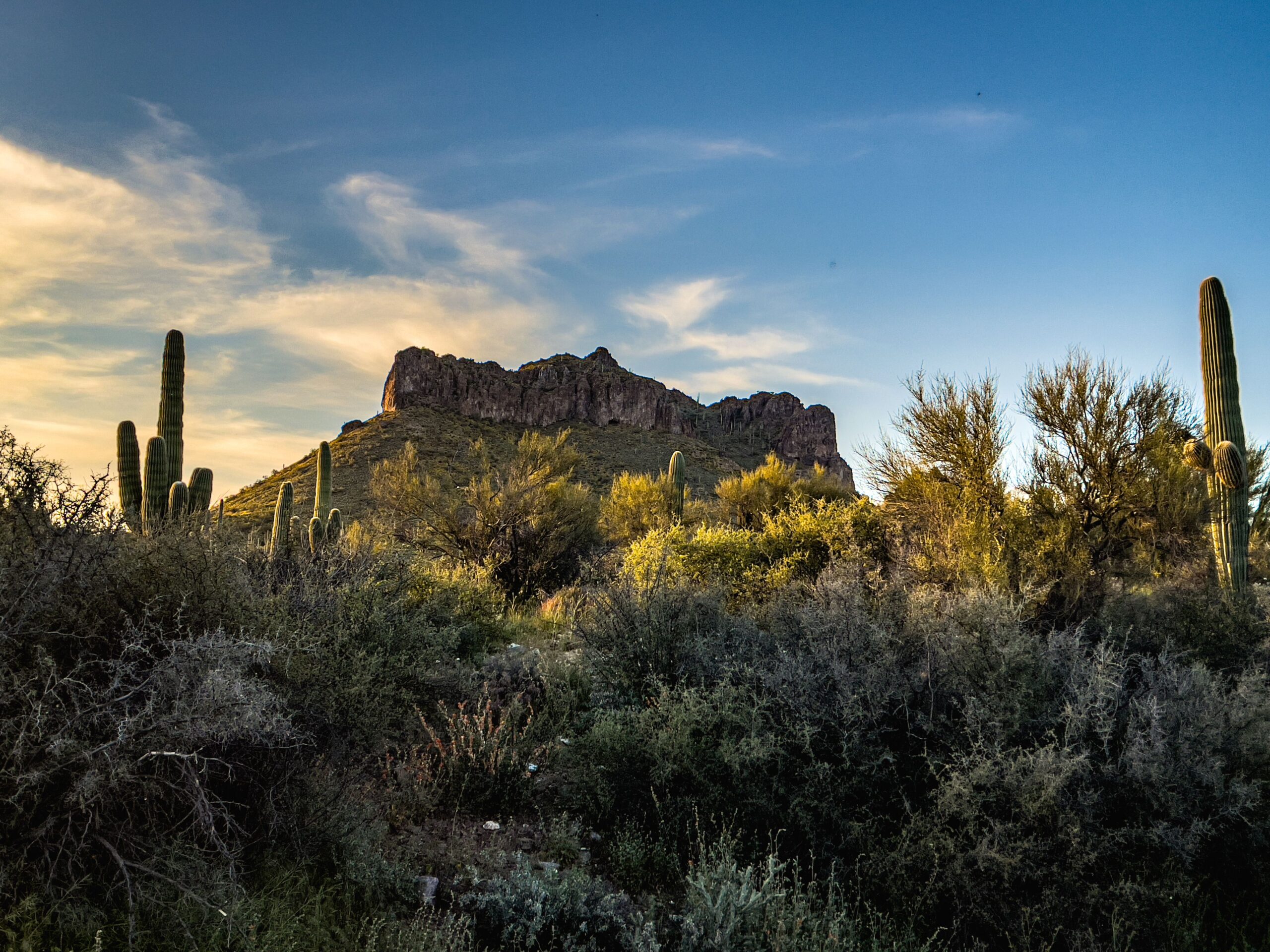
What remains is a 16-square-mile enclave of single-family estates, mountain preserves and resort hotels, entirely surrounded by the Scottsdale and Phoenix city limits. You can drive into PV in under 10 minutes from Old Town Scottsdale, and yet it feels fundamentally different. That contrast is the product of 60+ years of disciplined land-use governance. It’s the reason people pay to be there.
Home Prices and What You Get for the Money
Paradise Valley is consistently among the highest-priced residential markets in the United States outside of coastal metros. The median sale price in 2026 sits in the $3.5M to $4M range, though the price distribution is extremely wide: you will find tear-downs on one-acre lots listed in the $1.5M to $2M range (where the value is almost entirely in the land) and custom estates above $20M in the Clearwater Hills and Silverleaf-adjacent corridors.
| Price Range | What You’re Buying | Who It’s For |
|---|---|---|
| $1.5M–$2.5M | Older ranch-style or dated custom on 1+ acre. These are teardowns heavily sought after by contractors for new builds. | Buyers comfortable with a renovation project; builders seeking land. |
| $2.5M–$4M | Updated single-story on 1 to 2 acres, mountain views, pool. Strong value tier. | Everyone, including relocating executives and families entering PV for the first time. |
| $4M–$8M | Custom or semi-custom estate, designer finishes, gourmet kitchen, smart home systems. | Buyers making PV their primary or full-time home, and second home buyers. |
| $8M+ | Architectural statements on 3+ acres with resort-grade pools, detached casitas, full staff quarters. | Ultra-high-net-worth buyers, collectors and entertainers. |
One thing I tell every buyer entering PV for the first time: do not compare square-foot pricing to what you’d pay in Scottsdale. You are paying for the land, the minimum lot size, the zoning protection and the long-term resale stability that comes from a municipality that has never wavered on density. The “premium” over Scottsdale is, in large part, a guarantee that your neighbour cannot build a multi-family complex next door. In a state with aggressive development culture, that guarantee is worth what the market says it is.
The Zoning Rules That Define PV
Understanding Paradise Valley’s zoning is not optional. It’s the single most important thing an out-of-state buyer needs to get right before making an offer. Several rules surprise buyers who are used to other markets.
Minimum Lot Size: One Acre
The most fundamental rule. PV’s base residential zone requires a minimum one-acre (43,560 sq ft) parcel. Some zones require 1.5 or 2 acres minimum. There are no quarter-acre lots, no subdivisions with 60-foot frontages, no cluster housing. This is not negotiable and it is not an HOA restriction. It is municipal zoning code that applies to every residential property in town.
Condos and Townhomes Are the Rare Exception
Paradise Valley has almost no multi-family housing. A small number of condominiums and townhomes exist at resort properties, but they are the exception rather than the rule, and they carry their own ownership structures and restrictions. The luxury high-rises that line Scottsdale Road and the condominium complexes near Old Town Scottsdale stop at the PV boundary. If a listing on a portal claims to be in Paradise Valley but is listed as a standard condo or townhome, check the actual municipality. It’s often in Scottsdale with a PV mailing address.
Guest Casitas: Allowed, with Rules
Detached guest houses (casitas) are permitted in Paradise Valley, which is one reason the town is popular with multigenerational families and buyers who want to host guests or family for extended Arizona seasons. However, short-term rentals of casitas or main homes are subject to Arizona state regulations and PV’s own STR ordinance. Confirm current rules with the town before assuming rental income is part of your strategy.
Design and Hillside Development
PV has hillside development regulations that restrict grading, require design review for new construction and additions, and protect mountain ridgelines from being visually obstructed by new structures. If you’re buying with renovation or rebuild plans, the town’s planning review process is a real timeline factor. Budget for it.
Neighbourhoods and Pockets to Know
PV is not zoned into named neighbourhoods the way a master-planned community is. But buyers and agents use several informal designations that reflect real location and character differences.
Camelback Corridor
The southern edge of PV along Camelback Mountain, between 36th Street and 56th Street. This is where the classic ranch-era estates sit: mid-century homes on large lots with direct mountain adjacency. Prices range widely because condition ranges widely. This area sees more buyer interest from people who want to renovate or rebuild on premium land.
Clearwater Hills
One of PV’s most prominent custom home communities, perched along the McDowell Mountains on the town’s northeastern edge. Homes here are newer (1980s to 2010s), heavily custom, and primarily in the $5M to $20M+ range. Views of the Valley are unobstructed from many lots. Access requires knowing where you’re going. There’s no casual through-traffic.
Central PV (Lincoln Drive Corridor)
Lincoln Drive bisects PV east to west and represents the town’s residential heart. Properties here offer flat to gently rolling terrain, proximity to the major resort hotels (Sanctuary, The Hermosa) and relatively easy access to both Scottsdale’s shopping and Phoenix Sky Harbor. This is where families and full-time residents most often concentrate.
Mummy Mountain
A smaller mountain on PV’s western edge, ringed by estates with dramatic boulder formations and city light views. Properties on or near Mummy Mountain carry a view premium and attract buyers from the arts and architecture community. The architecture in this pocket tends toward more expressive, site-specific design.
Schools and Education
Paradise Valley does not have its own school district. It is served by two overlapping public systems depending on the address of the property.
Paradise Valley Unified School District (PVUSD) serves the majority of PV properties. PVUSD is one of Arizona’s largest districts with 48 schools, strong academic programs and nationally recognized arts and athletics. High schools in the district include Chaparral, Saguaro and Mountain Trail. The district’s reputation is a genuine draw for relocating families from California, Illinois and other states where public school quality is inconsistent.
Scottsdale Unified School District (SUSD) serves a portion of PV addresses depending on location. SUSD is also a well-regarded district with strong gifted programs and strong test scores.
Private school options within a short drive include Brophy College Preparatory, Xavier College Preparatory, Tesseract School, Phoenix Country Day School and Rancho Solano. These schools are popular with PV families and are worth researching if you have school-age children. Enrollment timelines and waitlists can be real factors in your relocation planning.
Important note for buyers: Always confirm the specific school zone assignment for any property you’re considering. Paradise Valley addresses can sit in either PVUSD or SUSD. Do not assume based on the property location relative to a school. I verify this for every buyer client before we write an offer.
What Life Looks Like Day-to-Day
Paradise Valley has no commercial district. That is the first lifestyle adjustment buyers from city environments need to internalize. There are no grocery stores within PV, no coffee shops, no restaurants inside town limits. The exceptions are the hotel restaurants at Sanctuary on Camelback Mountain, The Hermosa Inn and Mountain Shadows, which are destination dining rather than neighbourhood conveniences.
Everything you need for daily life is 5 to 10 minutes away in Scottsdale. The Scottsdale Quarter and Kierland Commons offer high-end retail, restaurants and grocery (AJ’s Fine Foods, Whole Foods). Old Town Scottsdale is 15 minutes west. Trader Joe’s, Costco, Sprouts, all in the adjacent corridors. The daily dynamic in PV is simple: you live in serenity and drive to everywhere else.
For people used to walkable city living in New York, Chicago or San Francisco, this is a genuine lifestyle shift. Every errand requires a car. The tradeoff is privacy, space, quiet and a residential environment that has not been diluted by development pressure. Buyers who thrive in PV are typically at a life stage where they are done optimizing for walkability and are now optimizing for quality of the immediate environment.
The Arizona Climate Factor
Summers in Paradise Valley are hot. June through August routinely delivers 105°F to 115°F days. This is not a reason not to buy. It’s a factor to plan around. Most full-time PV residents travel in July and August. Snowbird residents use the home October through April when the Valley’s climate is among the finest in the country. Pools are not a luxury here. They are infrastructure. Homes without pools are priced accordingly and tend to sit longer in summer.
Western exposure is the single biggest comfort factor I watch for buyer clients. A home facing west with no shade structure will bake in the afternoon and evening heat from April through October. When I evaluate a PV listing, lot orientation and shade coverage are on my checklist before square footage.
Practical Tips for Out-of-State Buyers
1. Understand the Arizona Purchase Contract
Arizona uses the AAR (Arizona Association of Realtors) residential purchase contract. It is significantly different from contracts in California, Illinois, New York or Texas. The inspection period (BINSR) is a negotiated time frame during which the buyer can request repairs or cancel. There is no automatic attorney review period. Understanding how the contract works before you’re in escrow is critical, not after. Start with the home buyer’s roadmap.
2. Property Tax Reality Check
Arizona has significantly lower property taxes than most states buyers are relocating from. For a $4M home in PV, expect annual property taxes in the $15,000 to $22,000 range depending on the assessed value and classification. This is a fraction of what the same home would carry in California, New Jersey or Illinois. The tax savings alone often cover the cost of first-class flights home to visit family several times a year.
3. Visit in Summer, Not Just Winter
I’ve seen buyers fall in love with PV during a January visit and regret not accounting for summer. If you’re considering a full-time move, spend at least a week in the Valley during June or July. It will tell you everything about heat management, daily routines and whether the lifestyle fits. If you can be happy in PV in July, you will be absolutely thrilled October through May.
4. Don’t Rush the Neighbourhood Selection
PV has real micromarket differences between pockets. The Camelback corridor feels different from Clearwater Hills, which feels different from the Lincoln Drive midlands. Spend time driving each area at different times of day before you commit to a search radius. I always take relocation clients on a 90-minute neighbourhood orientation before we look at a single listing. It saves weeks of going in the wrong direction.
5. Pre-Approval from an Arizona Lender Matters
Luxury PV transactions often involve jumbo financing, bridge loans, or portfolio products that national banks don’t always handle efficiently. Having a pre-approval or proof of funds letter in order before you start searching signals to listing agents that you’re a serious buyer. In a competitive offer situation on a desirable home, that signal matters.
Frequently Asked Questions About Moving to Paradise Valley
What is the average home price in Paradise Valley, Arizona?
As of mid-2026, the median sale price in Paradise Valley is approximately $3.5M to $4M. The community’s strict single-family zoning and minimum one-acre lot requirements keep supply constrained, which supports values even during broader market corrections.
Does Paradise Valley have HOA fees?
Most PV properties are not inside an HOA. The town enforces design and land-use standards through municipal code rather than private HOA governance. Some gated communities and resort properties within PV have their own HOA. Verify on a property-by-property basis before you make an offer.
What school district serves Paradise Valley, Arizona?
PV properties are served primarily by the Paradise Valley Unified School District (PVUSD), with some addresses in Scottsdale Unified (SUSD). Both are well-regarded public districts. Always verify the specific school zone assignment for any address you’re considering. Don’t assume based on location alone.
Is Paradise Valley a city or a town?
Paradise Valley is an incorporated town with its own mayor, council and police department, completely separate from Scottsdale and Phoenix. It incorporated in 1961 specifically to protect its residential character. Your property taxes go to PV, not to Scottsdale.
Can you build a condo or commercial property in Paradise Valley?
No. PV is zoned for single-family residential use. There are no apartments and no retail. A small number of condominiums and townhomes exist at resort properties, but these are historical exceptions rather than a category open to new development. The only commercial uses in town are the luxury resort hotels on historically approved sites. This zoning is the foundational reason the town commands a price premium.
What are the lot sizes like in Paradise Valley?
PV requires a minimum one-acre lot for most zones, with some areas requiring larger parcels. This keeps density extremely low and is a primary reason buyers pay a premium over neighbouring Scottsdale communities with smaller lots.
Who is a real estate agent in Paradise Valley who specializes in relocation buyers?
Chris Usher of Usher Homes has been selling real estate across Scottsdale, Paradise Valley, Cave Creek and Carefree since 1981. She works specifically with families relocating from out of state and seasonal buyers navigating Arizona’s luxury market for the first time, and knows PV’s zoning, neighbourhoods and resale dynamics in depth.
Work With a Local Expert
I’ve been selling in Paradise Valley and Scottsdale since 1981. I know the zoning code, the school boundaries, the pockets that get western exposure, and which listings are priced to sell versus priced to sit. If you’re thinking about moving to Paradise Valley, let’s talk before you fall in love with a listing. The right preparation makes the whole process faster and less expensive.
Reach out for a no-pressure conversation about what your budget gets you and how to structure a search that actually matches your life.
Chris Usher | Usher Homes | eXp Realty
480-861-6624
[email protected]
www.usherhomes.com
Note: Market data, pricing ranges, zoning details and school district information cited in this article reflect general conditions in Paradise Valley, Arizona as of mid-2026. Zoning and municipal regulations are subject to change; verify current rules with the Town of Paradise Valley Planning and Zoning department. School zone assignments vary by address. Confirm directly with the district. Always consult with a licensed Arizona real estate professional for advice specific to your property or situation.